

Reliable Solar Power with Battery Backup and Grid Support
Hub Power’s hybrid solar solutions are designed for cabins, cottages, rural homes, and residential properties that want lower electricity costs, backup power, and greater energy independence without fully disconnecting from the utility grid.
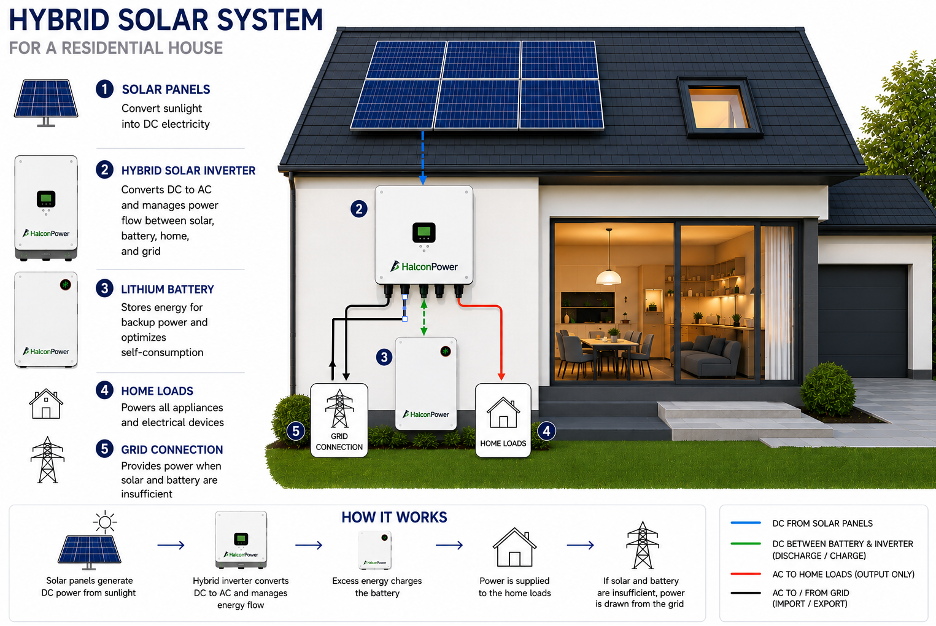
A hybrid solar system combines solar panels, a hybrid inverter, lithium or lead acid battery storage, and grid connectivity into one intelligent energy system. During the day, solar panels generate power for your home or cabin. Excess solar energy can be stored in batteries for later use. When solar production is low or battery levels are limited, the system can draw power from the grid automatically.
For homeowners who want protection during outages, hybrid solar systems can also provide backup power to essential loads such as lights, refrigerators, freezers, internet equipment, water pumps, heating controls, and other critical circuits.
What Is a Hybrid Solar System?
A hybrid solar system is a grid-connected solar power system that includes battery storage. Unlike a standard grid-tied solar system, which shuts down during a power outage unless special backup equipment is installed, a hybrid system can store solar energy and use that stored power when needed.
Hybrid systems are designed to manage multiple energy sources:
- Solar panels
- Lithium or lead acid battery storage
- Utility grid power
- Home or cabin electrical loads
- Optional backup generator integration
The hybrid inverter acts as the control centre of the system. It decides when to use solar power, when to charge or discharge the battery, when to draw from the grid, and when to provide backup power during an outage.
How Does a Hybrid Solar System Work?
During daylight hours, solar panels convert sunlight into electricity. That energy is first used to power the home or cabin. If the solar array produces more power than the property is using, the excess energy can charge the battery.
When the sun goes down or solar production drops due to clouds or poor weather, the battery can supply stored energy to the home. If the battery reaches its programmed reserve level, the system can automatically draw power from the utility grid.
In a properly configured backup system, the battery can be reserved for power outages. This allows the home to use grid power under normal conditions while keeping stored energy available for emergency backup.
When Is Grid Power Used?
Grid power is typically used when solar production and battery storage are not enough to meet the property’s electrical demand. This can happen at night, during extended cloudy weather, during periods of high energy use, or when the battery has reached its minimum reserve level.
Hybrid systems can be configured in different ways depending on the customer’s goals:
- Solar-first operation to reduce utility bills
- Battery backup mode to preserve stored energy for outages
- Time-of-use optimization to avoid expensive peak electricity rates
- Grid support when solar and battery power are insufficient
- Export of excess solar energy where net metering is available
Battery Backup and UPS Capability
For cabins and homes that need reliable backup power, hybrid solar systems can be configured so the battery acts like a UPS during utility outages.
When the grid is operating normally, the system can keep the battery charged and ready. If the grid fails, the hybrid inverter automatically disconnects from the utility grid and supplies backup power from the battery to selected electrical loads. If solar energy is available during the outage, the solar panels can continue charging the battery and supporting the home.
This makes hybrid solar a strong solution for properties that experience outages, unreliable grid service, or high backup power requirements.
Common backup loads include:
- Refrigerators and freezers
- Well pumps
- Sump pumps
- Lighting
- Internet and communications equipment
- Heating system controls
- Medical or critical-use equipment
- Security systems
- Selected outlets and appliances
Hybrid Solar for Cabins
Hybrid solar is ideal for cabins and cottages that are connected to the grid but still need backup power and better energy control. Many seasonal and recreational properties experience voltage fluctuations, outages, or high electricity costs. A hybrid system helps reduce grid dependence while maintaining the convenience of utility backup.
For cabins, hybrid solar can support lighting, refrigeration, water pumps, small appliances, communications equipment, and essential heating or control systems. Battery storage also allows solar energy produced during the day to be used at night.
Hybrid Solar for Homes
For residential homes, hybrid solar provides a balance between energy savings and security. Homeowners can use solar energy during the day, store excess power in lithium batteries, and rely on the grid only when needed.
Hybrid systems are especially useful for homeowners who want backup power but do not want to depend entirely on a fuel-powered generator. They can also help prepare for rising electricity costs, increased energy demand, and future electrification needs.
What Components Are Included in a Hybrid Solar System?
A complete hybrid solar solution typically includes:
Solar Panels
Solar panels generate clean electricity from sunlight. The size of the solar array is based on the property’s energy usage, available roof or ground space, shading, and desired level of energy independence.
Hybrid Solar Inverter
The hybrid inverter manages the flow of electricity between the solar panels, batteries, home loads, and utility grid. It converts DC power from the solar panels and batteries into AC power for the home.
Lithium or Lead Acid Battery Storage
Lithium or Lead acid batteries store excess solar energy for use at night, during high-demand periods, or during utility outages. Battery capacity is selected based on the customer’s backup power needs, daily energy use, and desired runtime.
Backup Loads Panel
For outage protection, selected critical circuits can be connected to a backup loads panel. This ensures that essential equipment continues operating when grid power is unavailable.
Monitoring and Energy Management
System monitoring allows homeowners to track solar production, battery charge level, energy consumption, grid usage, and overall system performance.
Optional Generator Integration
A generator can be added for extended backup power during long outages or periods of limited solar production. The generator can recharge the battery and support loads when needed.
Benefits of Hybrid Solar
Hybrid solar systems provide several advantages for cabins and homes:
- Lower electricity costs
- Backup power during outages
- Better use of solar energy
- Reduced dependence on the utility grid
- Battery storage for nighttime use
- Protection for critical loads
- Optional generator support
- Improved energy security
- Scalable system design
- Smart monitoring and control
Hybrid Solar vs. Off-Grid Solar
A hybrid solar system is connected to the utility grid and uses batteries for backup power, energy savings, and energy management. An off-grid solar system operates independently without utility power and requires enough solar generation, battery capacity, and backup generation to support the property year-round.
Hybrid solar is usually best for homes and cabins that already have grid service but want backup power and lower energy costs. Off-grid solar is best for properties where grid power is unavailable, unreliable, or too expensive to bring to the site.
Choosing the Right Hybrid Solar System
The right hybrid solar design depends on:
- Daily energy consumption
- Available solar exposure
- Roof or ground mounting options
- Battery backup requirements
- Critical loads during outages
- Grid reliability
- Net metering availability
- Future energy needs
- Budget and expansion plans
Hub Power evaluates each property to design a hybrid solar system that matches the customer’s energy goals, backup power needs, and site conditions.
Why Choose Hub Power?
Hub Power designs hybrid solar solutions that combine solar generation, solar panel mounting solutions, lithium or lead acid battery storage, intelligent inverters, and professional system planning. Our team helps homeowners, cabin owners, and rural property owners reduce energy costs, improve reliability, and take control of their power supply.
From initial consultation and system sizing to equipment selection and installation support, Hub Power delivers practical solar solutions built for real-world performance.
Let’s Build the Right Hybrid/Grid Tie Solar Solution
Whether you need components or a complete system design, our team is ready to help.
👉 Request a Quote, sales@hubpower.ca
👉 Talk to an Expert, 604-420-7737