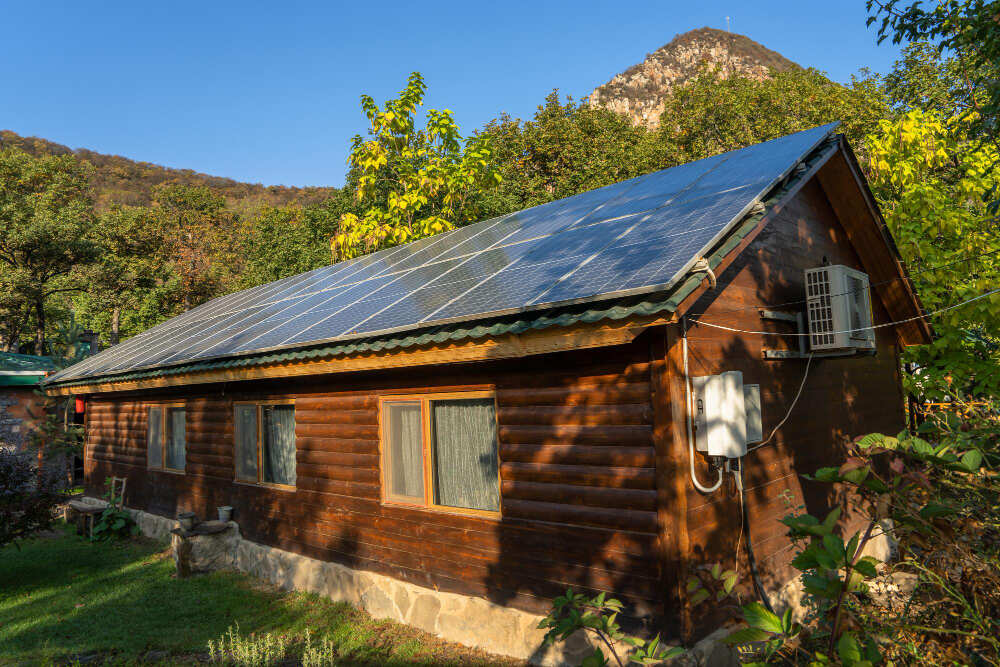
Transform Remote Cabin Living With Modern Solar System Batteries in Canada
Key Takeaways
- A well-matched battery bank can make cabin power feel steadier, quieter, and easier to live with day to day.
- Battery choice matters just as much as panel size, especially when you run lights, a fridge, a water pump, and small appliances.
- Modular cabin packages give you room to start with what you need now and expand later.
- A complete setup works best when batteries, inverters, charge controllers, monitoring, and protection are chosen to work together.
- Pairing solar with a generator can cut generator run time and reduce wear during heavier use.
For remote cabin owners, solar system batteries in Canada have changed what off-grid living feels like. A cabin does not have to mean rationing every light switch or firing up a generator the moment the kettle goes on. With the right battery storage, you can keep the basics running with less noise, fewer interruptions, and more confidence during long weekends or extended stays.
That shift matters in Canada, where cabin use can swing from bright summer afternoons to short winter days, with cold mornings, shoulder-season storms, and long stretches between visits. When you unlock the door after a late drive and want the porch light, fridge, and water pump ready to go, battery storage becomes part of comfort, not just part of the electrical system.
Battery Storage Changes Cabin Life
Solar panels catch the eye, but the real heavy lifting happens quietly after sunset. When daylight fades or heavy clouds roll in, your battery bank takes over to supply what the panels collected earlier. Consider a typical Friday night at the lake. The sun drops behind the trees, so you flip on the kitchen lights, plug in your phone, and open the fridge to start dinner. The water pump cycles on while someone washes up, and the Wi-Fi router stays active in the corner.
None of these draws massive amounts of power on its own. Spread over four or five hours, they pull a steady current that relies entirely on your stored reserves. If your storage falls short, you end up rationing your basic comforts or walking outside with a flashlight to fire up the gas generator just to finish the evening.
When comparing solar system batteries in Canada, the most critical factor is not the sticker price. It is whether the capacity matches your actual routine. A hunting camp occupied for a few late-fall weekends demands a completely different battery reserve than a summer family retreat running a microwave and a pressure pump every day in July.
A properly matched setup completely changes the rhythm of your property. Instead of constantly checking voltage meters, you get a quiet, uninterrupted night. Your everyday loads stay powered long after sundown, generator noise becomes a rare backup plan rather than a daily requirement, and you establish a solid foundation that leaves room to expand if you decide to wire a new guest bunkhouse or upgrade your kitchen appliances down the road.
Choosing the Right Battery Chemistry for Your Cabin
Choosing a battery bank means matching the chemistry to how you actually spend time at the property. We stock several different types, including lithium LFP or LiFePO4, sealed deep cycle AGM, lead carbon deep cycle, and tubular 2-volt batteries. You base your decision on your budget, how often you cycle the system, and how much maintenance you are willing to manage during your trips.
Lithium LFP batteries make sense for many current off-grid setups. They deliver steady voltage until they are nearly empty and require almost zero maintenance. If your family spends weeks at a time by the lake and you hate the sound of a generator cutting through the quiet morning air, lithium gives you a deeper usable reserve. You can run the coffee maker and pump water for breakfast without watching the voltage gauge instantly drop.
Alternatively, sealed AGM batteries give you reliable deep-cycle performance in a familiar format, while lead carbon and tubular options fit specific off-grid designs that require heavy daily cycling. Just buying the most expensive option does not guarantee success if the rest of your equipment cannot support it.
Sizing a Battery Bank for Real Cabin Use
Battery sizing clicks into place once you shift from spec sheets to your actual routine. Grab a notepad and jot down every load at your cabin, what it is, roughly how long it runs each day, and whether it pulls power mostly during daylight or after the sun goes down.
Your list will probably look something like this:
- Interior and exterior lighting
- Fridge or freezer
- Water pump
- Phone and laptop charging
- Router or booster
- TV or small entertainment loads
- Coffee maker, microwave, or other short heavy drawers
From there, layer in your usage pattern. A summer-only weekend cabin has a very different demand profile than a place you visit through October, when mornings are cold and the sun sets noticeably earlier. Week-long stays pull more from the battery bank than quick two-night trips. Shoulder-season use means shorter charging windows and longer overnight draws. Each of those details nudges the battery size in a specific direction.
Here is something most cabin owners notice after a season or two: demand does not spread evenly across the day. It clusters. You pull up to the property, flip on the porch light, start the water pump, open the fridge, plug in phones, and begin cooking. That first hour or two after arrival is the heaviest stretch your battery bank will face, and it often happens in the evening when solar production has already wound down.
Building a Complete System, Not Just a Battery Bank
The right solar system batteries in Canada do their best work when the rest of the system is built to match. A battery bank sitting next to an undersized charge controller or a mismatched inverter will not perform the way the spec sheet suggests. Every component in a cabin power setup has a relationship with the others, and those relationships show up in daily use.
Hub Power carries the full range of what a cabin system needs. We provide solar panels that bring in the energy. A charge controller manages how that energy reaches the battery bank. An inverter or inverter-charger converts stored power into the AC current your cabin appliances actually run on. Monitoring and protection equipment, including breakers, fuses, and battery monitors, keeps the system operating within safe limits and gives you a clear picture of what is happening.
That last piece gets overlooked more often than it should. Without monitoring, you are reading the system through indirect signals, a fridge that seems slower to cool, lights that dim a little earlier in the evening. With the right monitoring in place, you can see state of charge, load draw, and charging input at a glance. That kind of visibility changes how you manage power at the cabin.
Our solar cabin packages are designed specifically for remote properties where utility power is not an option. They also work well alongside a generator for periods of heavier use. In practice, that pairing makes a lot of sense for Canadian cabin owners. Solar production covers the bulk of daily demand, the battery bank carries evening and overnight loads, and the generator fills in when a stretch of cloudy weather or a heavier-than-usual weekend pushes the system harder. The generator runs less, burns less fuel, and takes on less wear over time.
Why Modular Cabin Packages Make Sense
Many people hesitate because they think they need to get every detail perfect on day one. In practice, a modular system often makes more sense. You can start with a package that suits your current cabin routine and expand as your needs grow.
That matters if your cabin use is changing. A place that was once for short summer weekends might start seeing fall visits, longer family stays, or remote work days. A system with room to grow gives you more flexibility.
We list multiple cabin kits along with a custom cabin power option. That is useful because no two properties are quite the same. Roof space, shade, season of use, daily loads, and generator backup plans all affect the right setup. Some owners are best served by a packaged system. Others need a custom design, especially if the cabin supports more than a few basic loads or has plans for future expansion.
| Cabin Priority | What to Look For | Hub Power Category |
| Weekend Lighting and Device Charging | Right-sized battery bank, basic monitoring, dependable charging | Solar Cabin Packages |
| Fridge, Water Pump, and Daily Essentials | More storage capacity, inverter support, solid circuit protection | Inverters & Inverter/Chargers, Battery Monitoring |
| Lower Generator Use | Battery storage paired with solar production and generator support when needed | Solar Cabin Packages, Solar Charge Controllers |
| Seasonal or Shoulder-Season Use | Battery type and reserve sized for shorter days and longer overnight demand | Lithium LFP / LiFePO4, AGM, Lead Carbon, Tubular 2 Volt |
| Future Cabin Expansion | Modular system design with room for added loads later | Custom Cabin Power |
Remote cabin living feels very different when your power system is built around how you actually use the space. You are not trying to turn an off-grid property into something it is not. You are making it more comfortable, more practical, and easier to enjoy from the moment you arrive.
If you want lights, water, refrigeration, and everyday cabin routines to feel less tied to generator noise, the right solar system batteries in Canada can make that shift possible. Hub Power’s cabin packages, battery options, and custom power solutions give you a clear place to start.