Lead‑Acid vs Lead‑Carbon vs LiFePO₄: Which Is The Best For Solar Batteries in Canada?
Hub Power has over three decades of experience helping Canadians design and install solar energy systems that deliver reliable power to their homes, cabins, RVs, and vehicles. One of our most frequently asked questions is “Which type of battery should I choose for my solar panel system?”
Are you exploring your options for solar batteries in Canada? There are four main solar battery types:
- Traditional flooded lead‑acid
- Lead‑carbon deep cycle
- Lithium – specifically LiFePO₄ (LFP)
Hub Power offers all these technologies as part of our product lines, each one meeting your budget, usage needs and performance expectations. We discuss their respective strengths and drawbacks.
What Matters Most for Solar Batteries in Canada?
Before comparing different battery chemistries, it helps to establish what makes for an ideal solar battery:
- Depth of Discharge (DoD): How much of the battery’s capacity are you regularly discharging?
- Cycle Life: How many charge/discharge cycles a battery can undergo before suffering significant capacity degradation.
- Cold‑Weather Performance: Cold-weather performance is essential for solar batteries in Canada. They are used for off-grid applications and backup scenarios.
- Maintenance Requirements: Refilling Water levels when necessary (when flooding), inspecting terminals, checking ventilation, etc.
- Upfront Cost vs Lifetime Cost: Even the cheapest battery today may not necessarily remain so over an eight to ten-year time span.
We consider all these factors when helping customers build a solar system setup.
Flooded Lead‑Acid Deep Cycle Batteries
Best for: Budget-minded off-grid and backup systems where regular maintenance can be tolerated.
Flooded lead-acid has long been the foundation for deep-cycle applications. We offer various deep-cycle batteries for Marine / RV / Motive.
- Most affordable upfront per amp‑hour
- Well understood and easy to integrate with standard solar charge controllers
- Suitable for larger banks (for example, 2V tubular cells in sizable off‑grid systems)
However, there are trade‑offs:
- Requires regular maintenance – regularly checking electrolyte levels and adding more distilled water as required
- Due to gassing during charging, good ventilation is important for the effective operation of this battery.
- Reduce usable DoD (often 50% is recommended) in order to extend the life span
- Shorter cycle life than alternative solutions like lead carbon or LiFePO4
When budget is the primary concern when selecting solar batteries in Canada. If you are comfortable with regular maintenance requirements. A flooded deep-cycle battery could still prove suitable – we offer our HUB Tubular 2 Volt batteries, which offer powerful performance with extended longevity for long-term off-grid applications.
Lead‑Carbon Deep Cycle Batteries
Best for: Off-grid and partial state-of-charge solar systems which need long lifespan and resilience without incurring lithium price inflation.
Lead-carbon batteries represent an evolution from traditional lead-acid batteries, with carbon being added directly into their negative plate. Hub Power offers Lead Carbon Deep Cycle batteries specifically tailored towards solar systems
Why choose lead‑carbon?
- Improved cycle life over standard AGM and flooded batteries
- Better performance at partial state of charge (PSoC): Reduced sulfation when charged only partially each day. This is common when installing off-grid solar systems
- Higher usable DoD than most typical lead acid batteries; still not quite as deep as lithium, but far better than standard lead-acid
- Maintenance‑free and sealed in many designs.
This makes lead‑carbon an excellent choice for solar batteries in Canada, where:
- The site is off-grid; therefore, charge conditions vary (cloudy seasons with intermittent generator run times).
- Maintenance access may be restricted in remote cabins
- Looking for improved performance over standard AGM/flooded Batteries, but don’t want to invest in LiFePO4 Batteries Yet
Lead-carbon battery packs offer a midpoint between traditional lead acid batteries and lithium in terms of both cost and performance.
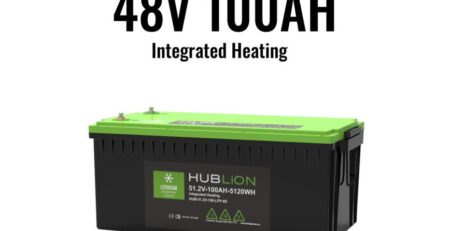
Lithium – LFP / LiFePO₄ Batteries
Best for: High‑performance solar systems where long life, high usable capacity, and low weight justify the investment.
Our Lithium – LFP / LiFePO₄ products are designed for customers who want the highest performance and lowest lifetime cost per kWh delivered.
Key advantages:
- Very high usable DoD: Often up to 80–90% usable capacity per cycle
- Exceptional cycle life: Thousands of cycles, making them ideal for daily‑use solar systems
- Lightweight: Perfect for RVs, marine, and mobile applications
- High charge and discharge efficiency: Less energy lost in the battery, more from your panels to your loads
- Minimal maintenance: No watering, no equalization
However:
- Higher upfront cost compared to lead‑acid technologies
- Requires proper battery management systems (BMS) and compatible chargers/inverters
- Needs careful consideration in cold environments (limited charging below certain temperatures)
For many customers building serious off‑grid cabins, full‑time RV setups, or robust residential backup systems, LiFePO₄ is increasingly becoming the go‑to chemistry for solar batteries in Canada. When sized and installed correctly, the long service life and deep usable capacity often offset the initial investment.
Matching Battery Type to Your Application
At Hub Power, we don’t believe there is a single “best battery” for everyone. The right choice among flooded lead‑acid, AGM, lead‑carbon, and LiFePO₄ depends on:
- Application: Off‑grid cabin, grid‑tied with backup, RV, marine, commercial, or motive power
- Budget vs performance: Lowest upfront vs lowest lifetime cost
- Maintenance tolerance: Are you okay with regular checks, or do you want hands‑off operation?
- Location and climate: Especially important for solar batteries in Canada, where winter temperatures and seasonal sunlight vary drastically
- Space and weight constraints: Critical in RVs, boats, and mobile work vehicles
Because we carry all of these technologies – from Sealed Deep Cycle AGM and Lead Carbon Deep Cycle to Lithium – LFP / LiFePO₄ and HUB Tubular 2 Volt – we can help you design a system that fits your real‑world needs rather than forcing a single technology.
Talk to Hub Power About Your Solar Battery Options
Whether you’re powering an off‑grid cabin in the Interior, adding backup power to a home in the Lower Mainland, or upgrading the electrical system on your RV or boat, choosing the right battery chemistry is crucial to performance and longevity.
If you’re evaluating solar batteries in Canada and aren’t sure whether lead‑acid, AGM, lead‑carbon, or LiFePO₄ is best for your project, our team is here to help. With decades of experience and a full range of batteries, solar components, inverters, chargers, and monitoring products, we can guide you to a solution that fits both your technical requirements and your budget.
You can explore our battery categories and solar products, or contact our energy experts directly to discuss your specific application.