How to Size a Lithium Ion Solar Battery in Canada: kWh, Inverters, and Real‑World Examples
As Canada’s premier distributor of batteries, solar, and power conversion products. We regularly help clients in designing energy systems. An important aspect of any solar installation is energy storage, like lithium-ion solar batteries. This is an increasingly popular option due to its efficiency and longevity, but accurately sizing one often proves challenging. To address this, we will discuss effective methods for selecting appropriate capacities of lithium ion solar batteries in Canada. Including factors like daily energy usage patterns, autonomy requirements and inverter specifications, supported with practical examples.
What is your energy usage in kWh
Properly sizing a lithium ion solar battery in Canada involves understanding your daily energy consumption in kilowatt-hours (kWh). Your kWh usage represents how much power is being consumed over time.
The starting point for grid-tied homes would be reviewing your utility bill to establish daily average usage levels; then, divide by 30 for an estimated daily average. However, full backup or off-grid operation requires planning ahead for higher usage days as well.
Off-grid cabins, RVs and marine systems often lack bills as reference tools; to help estimate electrical loads you expect to run without one available for reference we suggest listing all expected loads along with their estimated wattage, hour of usage per day (a 100W light running for five hours would use 500 Watt-hours or 0.55kWh daily); then adding up each appliance until your daily demand total is determined.
Once you know your daily kWh requirements, sizing a lithium ion solar battery in Canada to meet them becomes much simpler.
Decide how many days of autonomy you need
A second important decision for your system will be how many days of autonomy it provides. Autonomy refers to how long your battery bank can power loads without additional solar input from PV modules. This decision becomes even more critical in Canada, where cloudy periods, snow cover and short winter days are common in many regions.
Home and cabin owners looking for energy independence should aim for at least one to three days of autonomy. Using 5 kWh daily and targeting two days’ autonomy would require at least 10 kWh worth of usable battery storage capacity.
Lithium ion solar battery in Canada offer several key advantages over traditional lead-acid ones, including their capacity for deep discharging. Traditional lead-acid batteries are limited by regulation to 50% depth of discharge before becoming unusable, while quality LiFePO4 (LFP) lithium cells can often discharge up to 91%, giving you more usable energy from less physical battery bank space/weight/BoS costs reduction.
Convert kWh into battery bank size
Once you know your daily kWh consumption and the number of desired days of autonomy, you can convert these figures to determine an ideal battery bank size.
Let’s say your off-grid cabin requires 4kWh per day, with two days of autonomy planned, which equates to 8 kWh usable energy. If using a lithium ion solar battery in Canada that permits up to an 80% depth of discharge rate, that number, 8 kWh, would be divided by 0.08, yielding 10kWh as the nominal capacity.
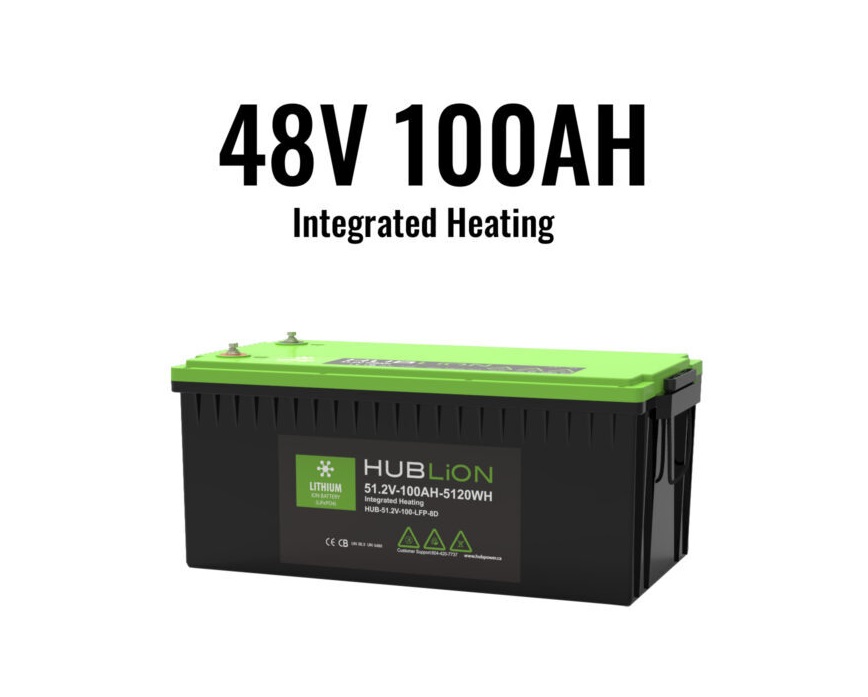
From there, we assess your system’s voltage. Many RV and marine systems run at 12V, larger off-grid cabins and homes usually employ 24V or 48V systems to limit current flow and cable sizes. For instance, a 48V 10kWh battery bank offers approximately 208Ah of capacity at 48V, which could come from either one large 48V lithium battery module, multiple smaller modules configured in parallel or other sources, depending upon product or application specifications.
Our lithium batteries were designed for integration with solar charge controllers, inverters and inverter/chargers. We always aim to match battery bank voltage and capacity according to customer-requested inverter system requirements and load profiles when recommending lithium solar batteries in Canada.
Match battery size to inverter power requirements
Battery capacity (kWh) should only be considered part of your inverter decision-making. Power rating – typically expressed in Kilowatts (kW), measures how much load can run continuously over any given period of time.
Assuming an off-grid home uses a 4-8kW inverter, its battery bank must supply sufficient current to the inverter without exceeding either its maximum continuous or surge current ratings. Quality lithium batteries have the capacity to produce this current however not all products are the same. Others deliver smaller steady loads, while others can withstand larger surge loads like well pumps or air conditioning compressors.
When searching for lithium ion solar batteries in Canada, our team takes care to select an optimal battery bank that can support all your energy loads. From a microwave oven, a well pump, electric tools or large startup surges for motors. Our team helps make sure it can meet these peak demands while still meeting daily energy demands.
Factor in Canadian climate and location
Canada’s climate is diverse, from mild coastal regions to very cold interior and northern environments. Temperature directly affects battery performance and sizing considerations.
Lithium iron phosphate batteries perform well in cold temperatures, but charging below freezing must be managed correctly to protect the cells. Many lithium batteries designed for use in Canada include low‑temperature charge protection or built‑in heating options. Even with these protections, cold weather can reduce available capacity and efficiency.
When we size a lithium ion solar battery in Canada, we consider where it will be installed: a heated utility room, an insulated mechanical space, a cabin crawlspace, or an unheated outbuilding. In colder locations or unconditioned spaces, it may be wise to slightly oversize the battery bank to account for reduced effective capacity in winter or to invest in enclosures and temperature management.
Solar production is also highly seasonal in Canada. Short winter days and low sun angles mean less solar energy is available, especially in more northerly regions. In many systems, we recommend combining proper battery sizing with a realistic solar array size and, in some cases, a backup generator to handle extended low‑sun periods.
Real‑world examples from Canadian applications
To bring this all together, consider a few simplified scenarios we often see at Hub Power.
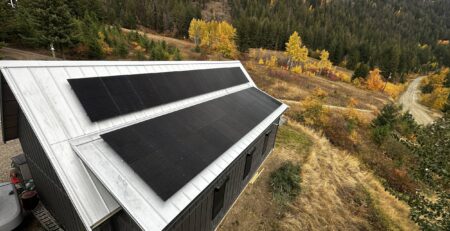
A small off‑grid cabin in British Columbia might use around 3 kWh per day, with wood heat and propane appliances reducing the electrical load. The owner wants two days of autonomy. We would likely recommend around 6–7 kWh of usable storage, which might translate into around 8–9 kWh of nominal lithium capacity with an appropriately sized solar array and a 3–4 kW inverter/charger.
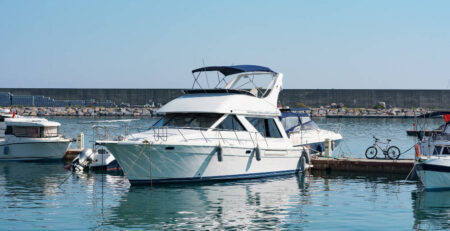
An RV or marine system, on the other hand, may use 1–2 kWh per day. In that case, a compact 2–4 kWh lithium bank can provide excellent performance, faster charging from alternators or shore power, and the ability to run inverters for AC loads without the weight and maintenance of lead‑acid batteries.
For a larger off‑grid home using 8–10 kWh per day with modern appliances and a mix of loads, it is common to see 15–20 kWh of lithium storage, often at 48V, paired with a 6–8 kW inverter/charger and a suitably sized solar array. In harsher climates or more remote locations, additional autonomy may be added for peace of mind.
Each of these examples uses the same core principles: define daily kWh, choose days of autonomy, convert to battery bank size, and ensure the inverter and climate conditions are correctly accounted for. This is the process we follow whenever we help a customer select a lithium ion solar battery in Canada.
How Hub Power can help you size your system
Sizing a lithium ion solar battery in Canada is as much about understanding your lifestyle and site conditions as it is about doing the math. At Hub Power, our team has decades of experience in batteries, solar, and power conversion products. We don’t just sell components; we help you design a system that works in real Canadian conditions.
Whether you are powering an off‑grid cabin, a full‑time home, a commercial site, or an RV or marine application, we can guide you through:
Load assessment and daily kWh estimation
Choosing days of autonomy that match your risk tolerance
Matching battery capacity to the right inverter and charge controller
Considering climate, installation location, and winter performance
Selecting high‑quality lithium LFP batteries and solar components that integrate smoothly
If you are planning your own solar and storage project and want to be confident in your design, reach out to the Hub Power team. We will help you choose the right size lithium ion solar battery in Canada so you can enjoy reliable, efficient, and low‑maintenance power for years to come.